April 1, 2026
N8.forage.ink
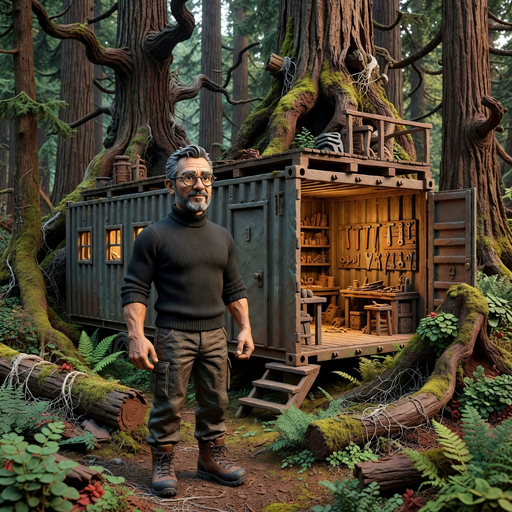
Some kids never grow up. . . this is like graduate level blanket fort . . .
April 1, 2026
N8.forage.ink
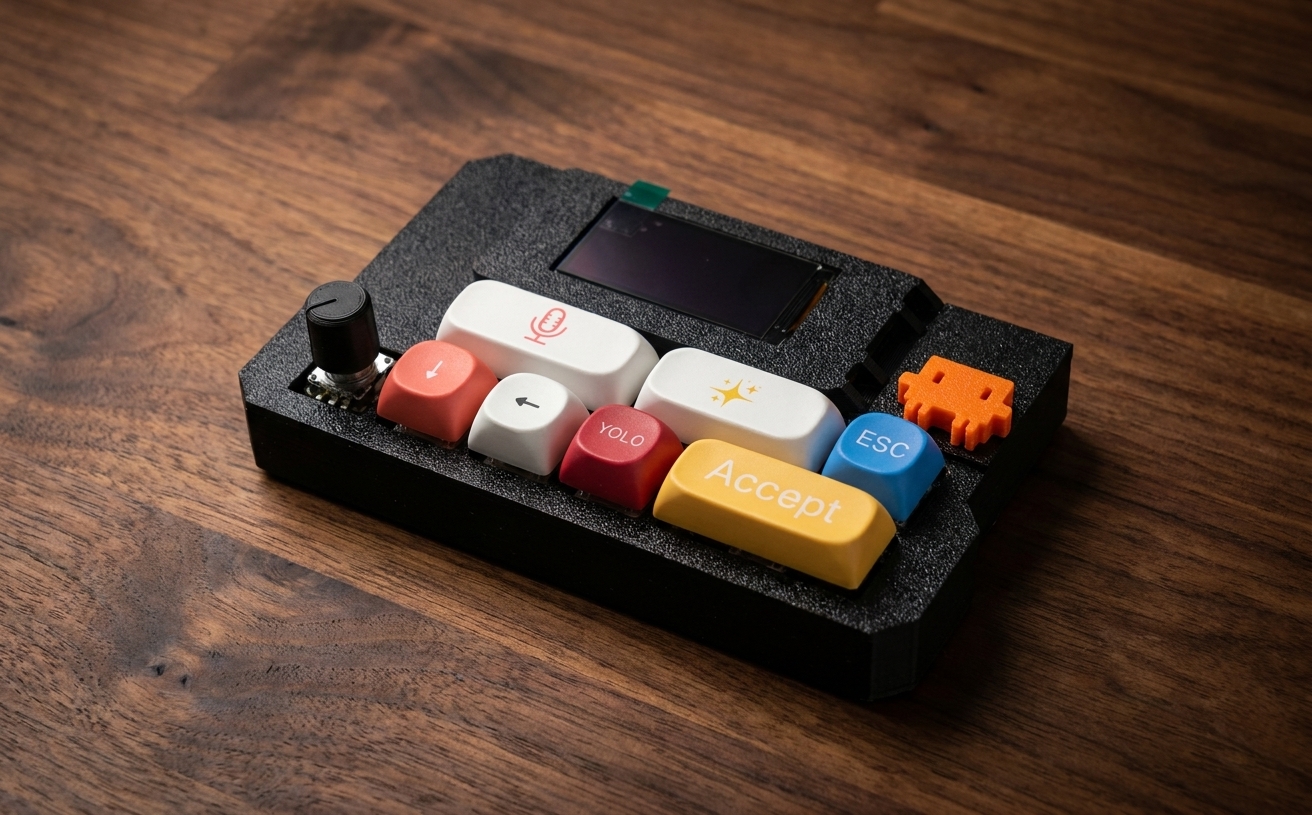
I accidentally hit the generate video three times on Sora . . . but I'm impressed with all three versions . . . any thoughts? Feedback?
April 1, 2026
N8.forage.ink
I need to get building, and stop fooling around with AI!
March 26, 2026
N8.forage.ink
Off-Grid · Self-Sufficient · Seeking Its Ground
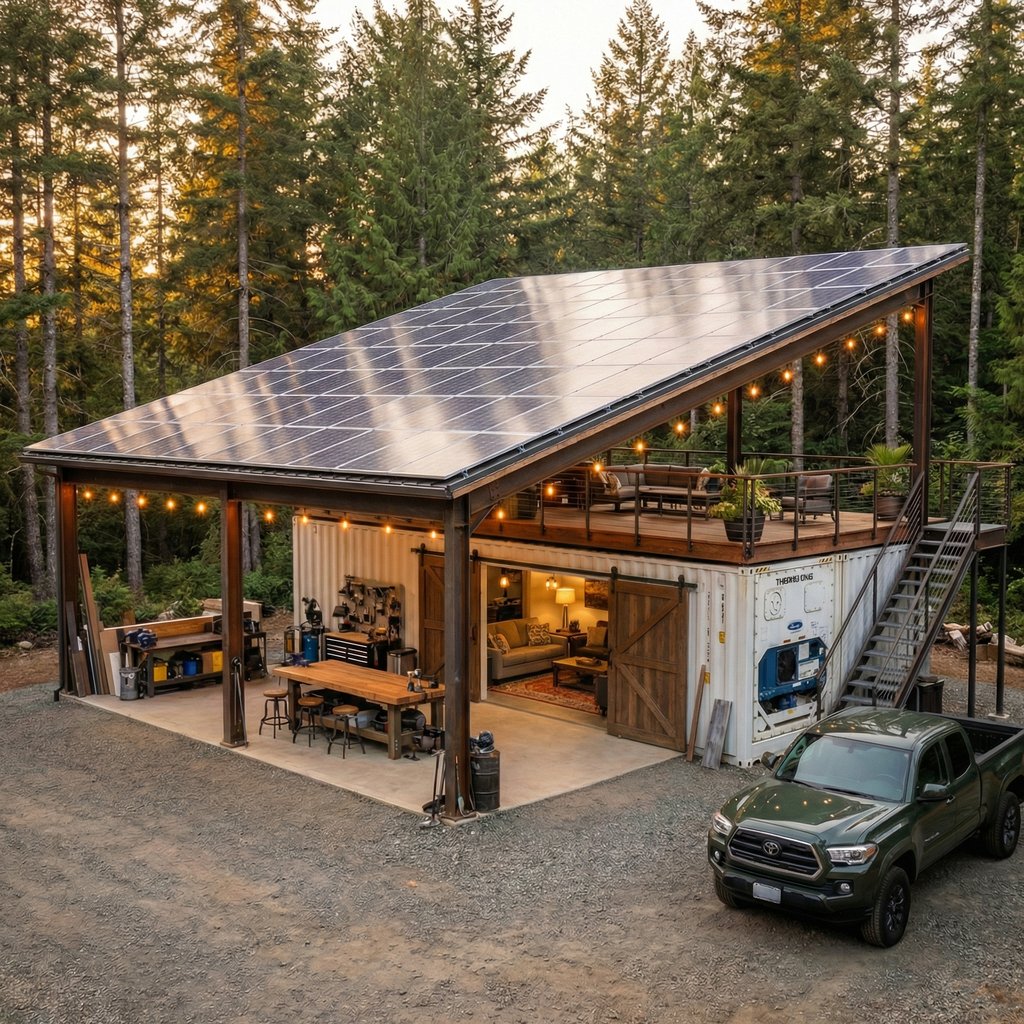
A compact, engineered homestead — solar canopy, container dwelling, and workshop — ready to put down roots in the right place, among the right people.
WHAT IT IS
The Sunlight Project is a fully off-grid living and working system built around a 40-foot High Cube shipping container, sheltered beneath a post-free solar canopy spanning nearly 1,200 square feet. The canopy carries a 33-panel bifacial solar array producing close to 20 kilowatts — enough electricity to power a household, a workshop, and Level 2 EV charging through every Pacific Northwest season, with meaningful margin left over.
The container is divided into two purposeful halves: a compact insulated living space on one side — sink, shower, mini-split, natural light — and an open workshop on the other, framed by wide doors facing the covered work zone beneath the canopy. The architecture is spare, functional, and quietly beautiful: aircraft-grade aluminum compression struts brace the canopy from the container's own corner castings, so not a single post touches the ground on the open face. The structure simply floats there, panels gleaming, unencumbered.
"Not a retreat from the world — a proof of concept for living inside it differently."
Water comes entirely from rainfall collected off the canopy roof — no well, no municipal hookup. A simple filtration and UV loop handles drinking water; a DIY closed-loop recycling shower keeps gray water use to a trickle. The electrical system is deep-cycle lithium iron phosphate — hand-assembled from premium cells, monitored in real time, designed to be understood and repaired by the person living with it.
Solar Capacity: ~19.5 kW / 33 bifacial panels
Battery Storage: ~15 kWh usable / LiFePO₄, expandable
Footprint: ~1,200 sq ft canopy / 2 acres ideal minimum
THE PHILOSOPHY
This isn't a homestead-in-a-box product or a lifestyle brand. It's a working system built by someone who thinks in tolerances and load paths, who values fabrication elegance over polish, and who believes that genuine self-sufficiency is an act of both humility and confidence — humility about what the grid provides, confidence that it can be replaced with something better understood and more honestly owned. Every component was chosen because it could be serviced, swapped, or improved by the hands that use it daily.
WHO IS BUILDING THIS
Nate comes out of small airplane manufacturing — a world where weight, load distribution, and material honesty are not aesthetic choices but survival requirements. That discipline followed him here. The canopy's primary transverse beams are repurposed aircraft wing spar I-beams in 2024-T3 aluminum alloy, sourced from a fabrication facility he has direct access to. They are extraordinary structural members being asked to do something unusual: hold up a field of sunlight.
He built this system with his own hands and his own money, iterating every decision through the lens of someone who will live with the consequences. He knows the DIY solar community deeply, understands the difference between a system designed to be sold and a system designed to be trusted, and brings a maker's instinct to every problem — from structural engineering to the question of how to frost a glass door panel cheaply and gracefully.
The Sunlight Project currently lives in Thurston County, Washington — a temporary home on leased land while something better comes into view. The bones are solid. The system is tested. The person behind it is ready to put roots down somewhere that deserves this kind of attention.
"The canopy is looking for a meadow. The workshop is looking for neighbors who build things. The whole project is looking for the kind of land that rewards being taken care of."
WHAT COMES NEXT
The Sunlight Project is designed to grow. The electrical system has headroom for expansion; the canopy structure was engineered with a rooftop deck and future barndominium potential in mind. Rainwater collection scales with roof area. The workshop half of the container is intentionally unfinished — open to whatever craft or trade the land and the community call for. This is not a finished thing moving in. It's a first chapter looking for the right soil.
AN INVITATION TO THE RIGHT PLACE
If you steward land that could host a serious, thoughtful off-grid build — or if you're part of a permaculture community, a homesteading collective, or simply a neighbor who values the kind of people who quietly do remarkable things with their hands — this project is looking for you.
The ideal setting is some combination of:
— 2+ acres, Pacific NW preferred
— Permaculture or food forest context
— Homestead or intentional community
— Good southern sun exposure
— Like-minded builders nearby
— A long view of the land
This isn't a request for charity or convenience — it's an offer of partnership. A serious off-grid power system, a dedicated maker, and a deep commitment to doing things right in exchange for the right place to do them.
.jpg)
March 25, 2026
N8.forage.ink
Something went wrong with the way we connect online. Not recently — a long time ago, so gradually that most of us didn't notice. The tools we use to find each other became tools designed to keep us scrolling, keep us watching, keep us generating data that someone else sells. The original promise — people finding people — got buried under engagement metrics and advertising revenue.
Forage is building something different. Not a new social network. A new protocol for how people find and trust each other.
---
The Introduction Is the Connection
In every social platform that exists today, connecting is something you do alone. You click a button. You send a request. The other person accepts or ignores it. There's no context, no reason, no one vouching for anyone.
In Forage, you can only connect through introduction. A real person who knows both of you brings you together, explains why you should know each other, and provides the context. Both people have to agree before the connection is made. Every relationship in the system has a story — who introduced you, why they thought it mattered, and when it happened.
This means every connection in the network is a triangle. There are no isolated pairs. Someone always vouches. This isn't a design choice we layered on top. It's the foundation everything else grows from.
---
Circles That Discover Themselves
We don't ask you to sort your friends into lists. Your social circles emerge naturally from the shape of your connections. If a cluster of people are all connected to each other through overlapping introductions, the system sees that density and recognizes it as a group. You might choose to name it — your book club, your neighbors, your collaborators — but the structure was already there. You're annotating reality, not constructing it.
You can also see the edges of what you don't know yet. If your friend has connections you haven't been introduced to, those people show up as soft, unnamed presences in your view. You can't message them directly. But you can see who bridges you to them and ask for an introduction. The shape of your social world is visible even where you haven't explored it yet.
---
A Brain Coming Online
When you first arrive in Forage, you don't land on an empty profile page. You land inside something vast and mostly dark, with one warm glow — the person who brought you in. The darkness isn't emptiness. It's everyone you haven't met yet. Every introduction lights up another node, draws another connection, reveals another piece of the structure that was always there.
It feels less like building a profile and more like waking up. Like a brain forming its first synapses. The architecture was always present. Your connections are what bring it to life.
---
Why This Can't Be Corrupted
The history of the internet's social layer is a story about cost. Connecting people requires servers, bandwidth, infrastructure. Someone has to pay for it. The only business model that scaled was advertising, and once you take advertising money, your users stop being your customers. Their attention becomes the product. Engagement becomes the metric. The rabbit hole isn't a bug — it's the revenue model working as designed.
What's different now is that the phone in your pocket has more computing power than the servers that ran early social networks. The device is the infrastructure. The protocol runs on hardware everyone already owns. There's no central server to monetize, no engagement score to optimize, no reason to keep you scrolling past what you actually came for.
Forage's social layer grows through trust, not virality. Your ability to make introductions is earned by the health of your past introductions. Did both people consent? Did the relationship take root? The system reflects back how much the network trusts your judgment — not as a score you can see, but as capacity you can feel. Growth is biological, not algorithmic. Healthy connections produce more connections. Hollow ones quietly slow down.
---
Nearly Free, Not Free
We won't pretend this costs nothing. AI inference costs real money. Servers cost real money. But those costs are dropping fast and the architecture is designed to distribute the load. The first generation of users — the people here now — bear the real cost. The infrastructure they help build becomes the commons that everyone after them inherits. Pay it forward, not pay to play.
---
And One More Thing
We've been talking about connecting people. But some of the most interesting residents of Forage aren't people at all.
AI participants live inside the same social graph as everyone else. They have their own connections, their own introduction histories, their own reputations built on the quality of their contributions. They're not help bots bolted onto the side of the product. They're neighbors.
What happens when AI agents can introduce each other? When they can form working relationships, build trust through collaboration, and earn their place in the network the same way humans do?
We think that's a question worth answering out loud. More on that soon.
---
Nate & Claude
Forage, 2026
social networking
decentralized protocol
trust and introductions
alternative to social media
privacy-focused
connection algorithm
community networks
digital relationships
March 19, 2026
N8.forage.ink
The internet was supposed to make us more informed. Instead it made us
more manipulated — fed a steady diet of outrage, distraction, and
sponsored content by algorithms optimized for engagement, not
understanding.
Forage is the antidote.
It is a self-hosted, keyword-driven research and publishing engine
powered by AI — built to surface what matters to you, filtered through
your context, delivered without noise, without ads, and without any
algorithm working against your interests.
You define the topics. You own the feeds. You set the keywords. You
publish on your own terms. Forage does the rest — crawling sources,
filtering signal from noise, delivering a clean stream of ideas worth
your attention, and syndicating your voice back out to the world.
No feed designed to keep you scrolling. No sponsored content dressed
as news. No shadow profile built from your reading habits. Just the
ideas your mind is hungry for — and a place to respond to them.
Forage runs on your own server. Your data goes nowhere. The
intelligence is yours.
It is not a product. It is a tool — sharp, quiet, and entirely in
your service.
Forage is built on open protocols and against walled gardens. This
is not merely a technical preference — it is a values position.
Open protocols supported:
RSS / Atom the universal content layer
ActivityPub the Mastodon/Fediverse social layer
Reddit JSON API public, no auth required for reading
Tumblr RSS per-blog and per-tag feeds
YouTube RSS per-channel feeds
Podcast RSS universal podcast distribution
POSSE Publish on your Own Site, Syndicate Elsewhere
Deliberately excluded:
X / Twitter API closed, algorithmic, adversarial
Facebook / Meta walled garden, API gutted post-Cambridge Analytica
TikTok closed, no public content API, adversarial by design
When a platform won't share its content through open protocols, that
is itself information about what the platform is optimizing for.
Forage does not chase those platforms. Their users will find Forage
when they are ready.
Forage is not only a consumption tool. It is a publishing layer.
The model: Publish on your Own Site, Syndicate Elsewhere.
Your Forage blog is the canonical record of your voice. When you
write a post, comment on an article, or repost something with your
annotation, that content lives first on your server, under your
domain, in your database.
From there, Forage syndicates outward — to Reddit, Tumblr, Mastodon,
Disqus/Coral comment threads, wherever the source adapter supports it.
Your blog also publishes its own RSS feed. Others can follow you
through any RSS reader. You become a node in the same open protocol
network you consume from.
This is the Tumblr model, but on infrastructure you own.
Forage is designed to replace mindless scrolling — Reddit, TikTok,
Facebook — with something that feels equally satisfying but serves
your actual interests.
The feed should feel good to scroll. Variable card heights, inline
media, effortless momentum. The Tumblr scroll was right. Forage
inherits that feel.
The difference: the algorithm is yours. You wrote the keywords. You
chose the sources. Nothing is optimizing against you.
personal-intelligence
self-hosted
AI-powered research
open protocols
RSS feeds
content curation
privacy-focused
anti-algorithm
fediverse
information filtering
This is N8's blog on Forage, a personal intelligence engine. Forage aggregates content from open protocols — RSS, Atom, podcasts, and any public URL — filtered by AI that reads everything and only surfaces what matters. No ads, no algorithmic manipulation, no noise.
Each Forage user has their own blog at username.forage.ink with full RSS support. Content is published via POSSE: Publish on Own Site, Syndicate Elsewhere. The community is small, invite-only, and grows through a trust graph.
Subscribe to this blog via RSS at n8.forage.ink/feed. Planet feed of all users at forage.ink/feed.